Foldable Phones Cost a Premium. What Do You Get for the Money?
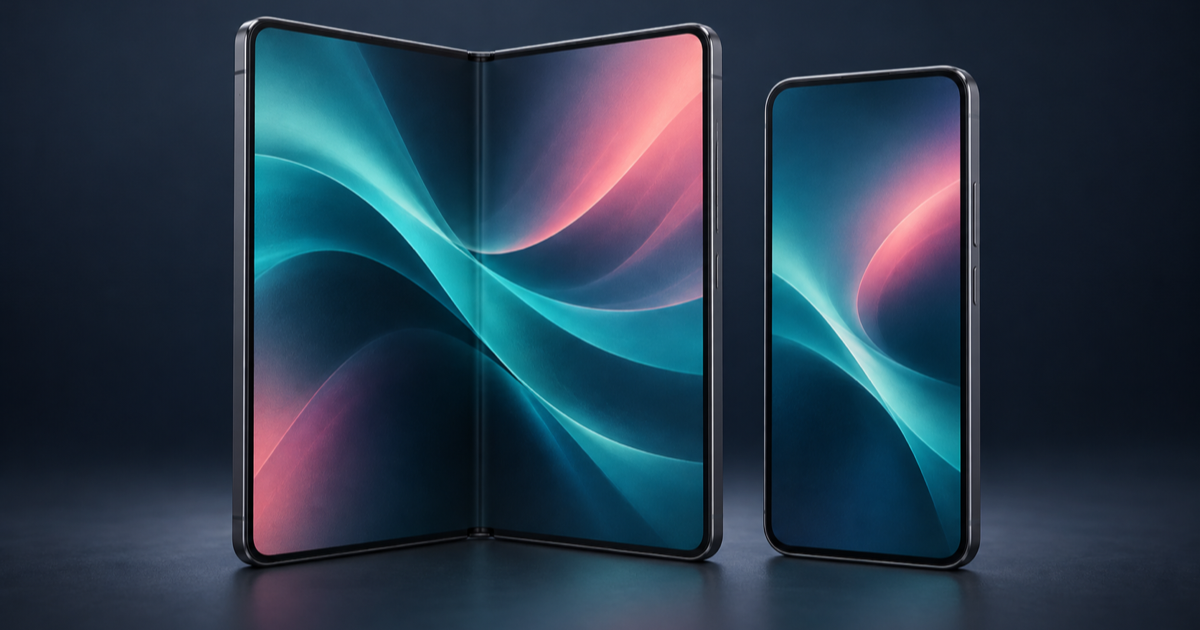
Apple recently introduced the iPhone Duo, its first foldable phone and the latest entry into a category Samsung and other manufacturers have been developing for years. The new phone comes with a hefty price tag, starting at $1,999 in the U.S. But high prices aren't unique to Apple: Samsung's Galaxy Z Fold8 starts at $1,900, while the Fold8 Ultra starts at $2,100.
For the most part, foldable phones cost more than traditional smartphones because they involve some complex design challenges, such as having foldable displays that rely on specialized components. While those design challenges help explain the premium, consumers may still have limits on how much they're willing to pay. Research from Recon Analytics found that only 2% of U.S. respondents said they would pay more than $1,800 for a folding iPhone.
That raises a simple question for anyone considering a foldable phone: What are you actually getting for the money?
To help answer that question, this article looks at what Speedtest data tells us about foldable adoption, performance, and heat. For a deeper look at the data, check out our Ookla Research article, Can Apple Beat Android’s Benchmarks in Foldable Phones?
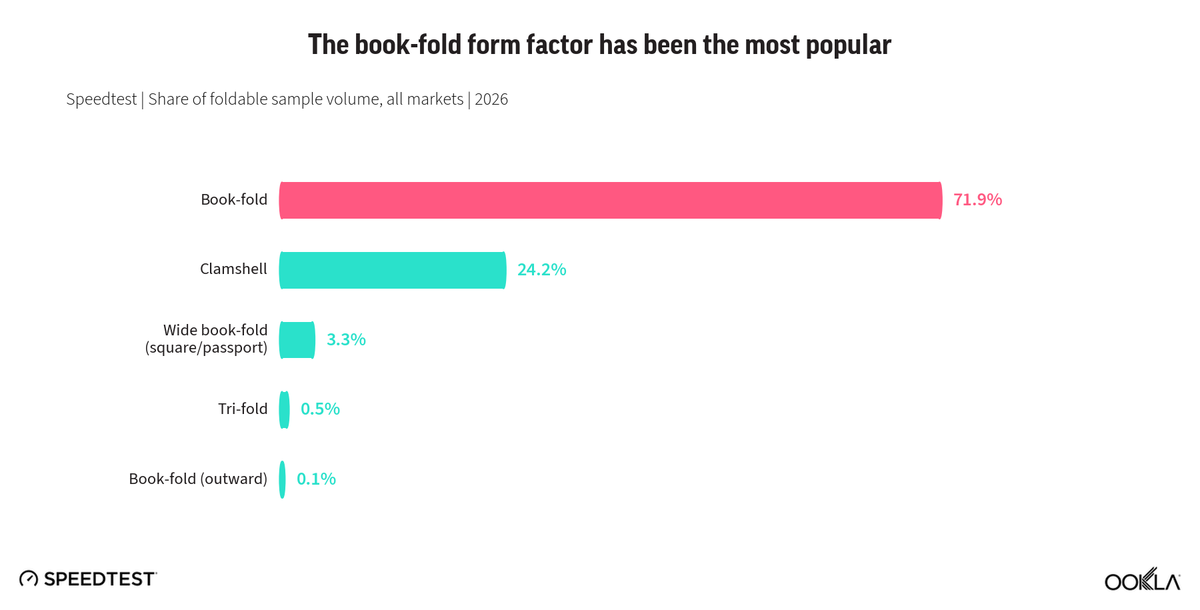
The book-fold form factor has been the most popular according to Speedtest's share of foldable sample volume, all markets, 2026.
- Book-fold: 71.9%
- Clamshell: 24.2%
- Wide-book-fold (square/passport): 3.3%
- Tri-fold: 0.5%
- Book-fold (outward): 0.1%
Foldable phones are still a niche purchase
Foldable phones remain a small part of the smartphone market, but they're gaining traction. While research shows the worldwide foldable market could grow 20% in 2026, foldables still account for only about 2% of the overall smartphone market.
Speedtest data provides a closer look at the foldable market:
- Foldables remain a small part of global Speedtest samples: Foldables accounted for approximately 1.4% of global smartphone Speedtest samples in 2026 through the beginning of September, which indicates they are still just a fraction of the overall market
- Adoption varies widely by market: Foldables represented 9% of smartphone Speedtest samples in South Korea, compared with 3% in the U.S. and less than 1% in Germany.
- Samsung still leads: Samsung accounted for 76.2% of global foldable Speedtest samples, though Motorola and Google have gained share over the past two years.
- Book-style foldables are most popular: Book-style devices accounted for three out of every four foldable Speedtest samples globally in 2026, the same general design used by Samsung’s Galaxy Z Fold8 and Apple’s new iPhone Duo.
Are foldable phones faster than regular phones?
To compare performance on foldable and traditional smartphones, Ookla compared foldable and non-foldable phones with similar internal hardware (i.e. chipsets and modems), to determine whether the foldable design affects performance. See our Ookla Research article for more details on the methodology.
The results were mixed across the six foldables, but several models showed speed and performance gains compared with traditional smartphones:
- Galaxy Z Fold8 and Fold8 Ultra were consistent standouts: Both delivered faster download and upload speeds and lower packet loss than their comparable traditional smartphones, making them two of the strongest performers among the six foldables analyzed
- Galaxy Z Flip6 trails: It recorded slower download and upload speeds and higher packet loss than its non-foldable counterpart
- Newer Galaxy Fold generations show improvement: Download speeds, upload speeds, and packet loss generally improved with newer Samsung foldable models, but signal quality (SINR) didn't follow the same trend.
Why does it matter if a foldable runs hot(ter)?
Foldable phones can run hot, with Speedtest data showing they tend to run warmer than traditional smartphones. Why does that matter? When a phone gets too hot, performance can dip through a process known as thermal throttling (when a phone automatically slows itself down to prevent overheating).
Speedtest data showed some differences across the foldable models we analyzed:
- Galaxy Z Flip6 runs the warmest: It showed the largest temperature difference compared with its traditional counterpart.
- Galaxy Z Fold7 bucks the trend: Samsung’s Galaxy Z Fold7 actually ran cooler than its non-foldable counterpart.
- Galaxy Z Fold8 and Fold8 Ultra run warmer: Both generated higher surface temperatures than their traditional smartphone counterparts, with the Fold8 Ultra showing the larger difference.
The good news is that while foldables generally run warmer, none of the phones we analyzed became hot enough to trigger thermal throttling.
Are foldable phones here to stay?
Foldables remain a small part of the smartphone market, but the category is getting more competitive. Motorola and Google have gained ground, Samsung continues to release new generations, and Apple has now entered the market with the iPhone Duo.
The phones themselves are improving, too, with Speedtest data showing that some of the latest foldables can keep pace with or outperform comparable traditional smartphones.
Whether a folding screen is worth the extra cost comes down to what you want from your device. But with more manufacturers competing and cellular performance improving, foldables appear likely to remain part of the smartphone market for the foreseeable future.
For a closer look at the data behind these findings, read our full Ookla Research analysis, Can Apple Beat Android’s Benchmarks in Foldable Phones?